
You are here
Inside the worst month for ships in the Strait of Hormuz
Inside the worst month for ships in the Strait of Hormuz
https://interactive.aljazeera.com/aje/2026/hormuz-journey-seafarer/
On the evening of October 13, a Singapore-flagged container ship, the GFS Pride, was making its way through the Strait of Hormuz.
The 222-metre (728ft) vessel could carry more than 2,800 standard shipping containers and had 21 crew members on board.
Hours later, it caught fire. By the next day, it had sunk, leaving only its containers floating in the strait.
Using ship-tracking data, satellite imagery and footage from the vessel, Al Jazeera reconstructed its final voyage and what it reveals about the dangers seafarers face each time they cross the strait.
Departure from Karachi port
On October 1 at 14:47 local time (09:47 GMT), the GFS Pride left Karachi port, Pakistan’s oldest and busiest.
The container ship was operated by Global Feeder Shipping (GFS), a Dubai-based container line majority-owned by Abu Dhabi’s AD Ports Group.
According to the company’s website, it was the only ship on GFS’s fortnightly shuttle between Karachi in Pakistan and Khalifa Port and Jebel Ali in the UAE, a sea journey of roughly 730 nautical miles (equivalent to about 1,350km) through the Strait of Hormuz.
Ship attacked
More than 120 ships attacked at sea
About 22 hours into the journey, the crew would have passed within 16 nautical miles (equivalent to about 30km) of where the Vela Nova, a Panama-flagged container ship, was struck by two US Hellfire missiles on August 11.
The US military said the ship was heading for an Iranian port in violation of its blockade and that the crew had ignored repeated warnings.
Iran closed the Strait of Hormuz on the war’s first day, later letting a number of ships through for tolls. The US has blockaded Iranian ports since April, apart from a pause in June and July. The two blockades now overlap in the waters the GFS Pride sailed.
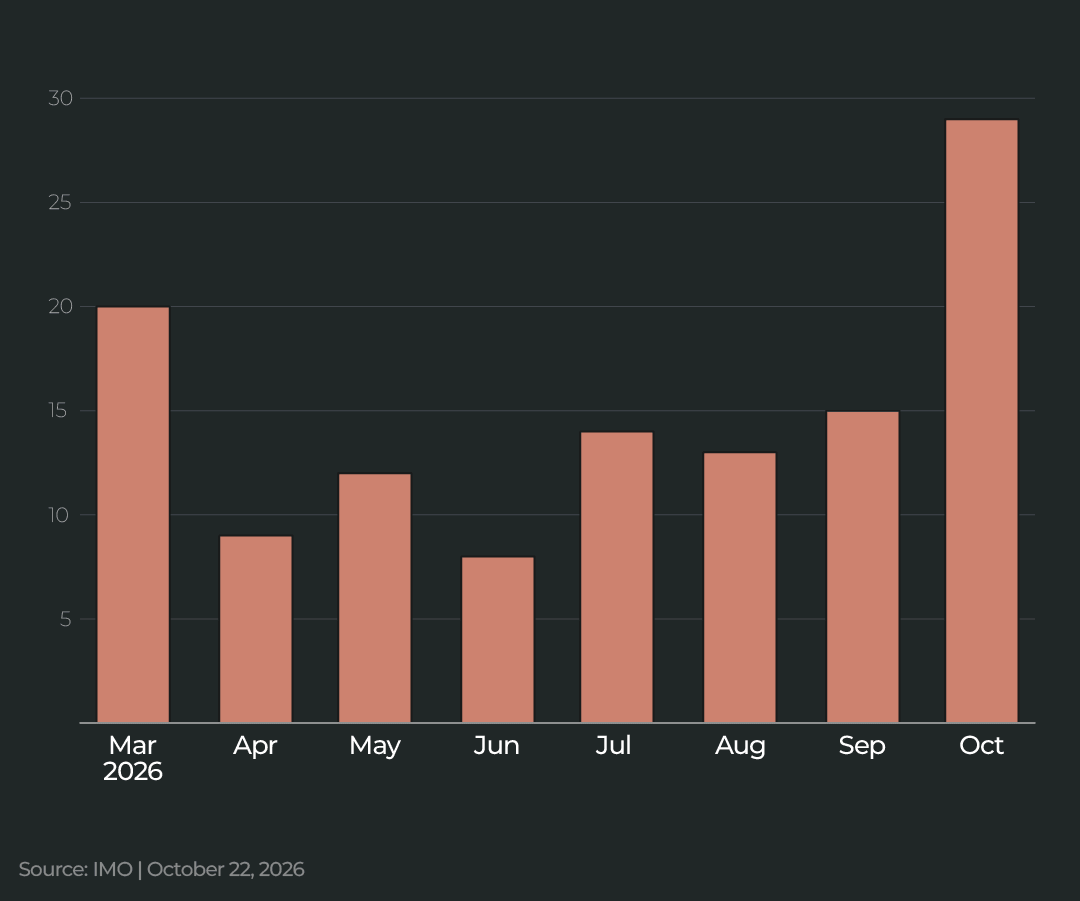
Attacks on shipping have risen since the US reimposed its blockade in July. With 29 ships hit so far, October is already the worst month of the war, ahead of the 20 attacks recorded in March.
That was one of more than 120 attacks on commercial shipping since the US-Israel war on Iran began on February 28, according to data from the International Maritime Organization (IMO) and the UK Maritime Trade Operations (UKMTO).
click https://interactive.aljazeera.com/aje/2026/hormuz-journey-seafarer/ to continue reading

Subscribe to The Seafarer Times RSS Feeds

User login
Who's online
There are currently 0 users online.