
You are here
Seafarers are not expendable
Seafarers are not expendable
August 24, 2026 https://splash247.com/seafarers-are-not-expendable/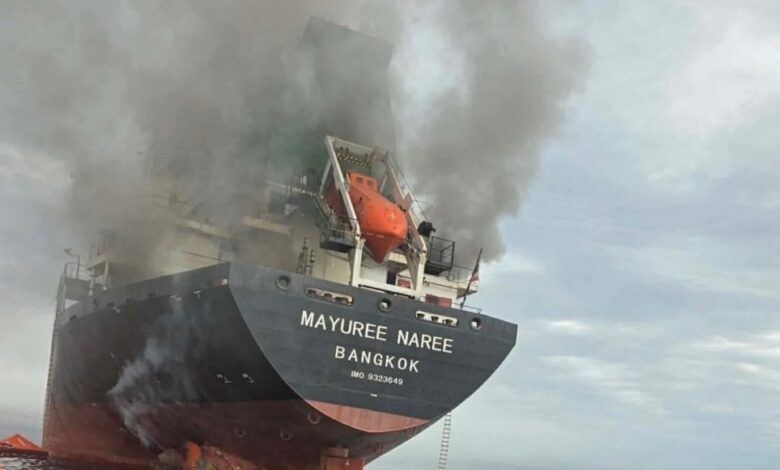
Condemnation after attacks on merchant shipping is no longer enough. The industry needs enforceable protections for crews operating in conflict zones. Mark O’Neil writes for Splash today.
The death of the chief engineer aboard the Liberian-flaggedMinoan Dignity in the Strait of Hormuz should stop every shipping leader in their tracks.
It raises a question none of us should avoid: are we doing enough to protect seafarers working in the world’s conflict zones?
The honest answer is no.
There will be condolences, statements and renewed declarations that seafarers must never become collateral damage. All will be sincerely meant. But unless those words lead to coordinated and meaningful action, they will offer little comfort to the family now grieving its loss, or to the thousands of seafarers still being asked to sail through dangerous waters.
We need to make this personal.
Imagine the public response if a missile struck a cruiseship and killed a passenger. The victim would immediately be seen as a parent, child, sibling, colleague or friend. The outrage would be immediate, political pressure would intensify and demands for action would be impossible to ignore.
Why should the death of a seafarer aboard a merchant ship provoke anything less?
Seafarers are civilians. They are not combatants and have no part in the political or military disputes through which they are required to navigate. In most cases, neither they nor their vessels have any connection to the countries involved.
Yet they face missiles, drones, mines and other threats in the Black Sea, the Red Sea and the Gulf. No additional payment can properly compensate someone for being placed in the firing line.
I say that as someone who has experienced being in the firing line myself.
We must also stop pretending that every seafarer has a completely free choice. Refusing to join a vessel or sail through a high-risk area could mean losing income, missing a rotation or damaging future employment prospects. When someone has a family depending on their wages, that is not a choice made on equal terms.
As an industry, we need to acknowledge our own part in this. Ships must trade, cargoes must be delivered and customers must be served. Those are commercial realities. But they cannot justify transferring an unacceptable level of personal risk to the people with the least influence over the decision.
Individual companies cannot solve this problem alone. An owner or operator withdrawing from a route may suffer commercially while competitors continue trading. That is why the response must be collective.
Shipping’s associations, shipowners, charterers, commodity traders, unions and seafarers’ organisations need to speak with one clear voice. Attacks on merchant ships and their crews are unacceptable, and those responsible must understand that there will be consequences.
The International Maritime Organization has condemned attacks on commercial shipping and repeatedly drawn attention to the dangers facing crews. Its interventions are important, but condemnation will not protect seafarers when those launching the attacks have little regard for international law.
Leadership must now extend beyond issuing statements.
Unions and national associations should ensure that Seafarers have a clear and enforceable right to refuse passage through an active conflict zone without losing pay or harming their future employment. Those who agree to sail must provide genuinely informed consent and receive appropriate compensation, insurance and firm commitments covering evacuation, repatriation and support for their families.
Risk assessments must be robust, transparent and credible. Commercial considerations must never override the judgement of the master or the safety of the crew. Where naval protection is required, the industry must press governments to provide it.
We should also be prepared to consider coordinated commercial measures against those who deliberately target merchant shipping. This could include restrictions on trade, refusal to call at particular ports or other targeted action agreed with governments and international bodies.
Such measures would be difficult. They would cause disruption, carry costs and create legal and humanitarian complications. But if we are unwilling to accept any of that burden, we are effectively asking seafarers and their families to accept all of it.
That is neither fair nor defensible.
The objective is not to escalate conflict or punish innocent populations. It is to defend a fundamental principle: merchant ships are not legitimate military targets, and civilian seafarers are not expendable.
Shipping has enormous economic influence when it acts collectively. We now need to show that we are prepared to use that influence to defend our people.
Every seafarer killed or injured is more than an entry in a casualty report. It is someone who boarded a ship to work, support a family and return home safely. Behind every casualty is a family receiving the news that all of us dread.
The world depends on shipping, and shipping depends on its seafarers. If we are sincere when we describe people as our greatest asset, then we must demonstrate it through our actions.
Sympathy is important. Condemnation is necessary. But neither is enough. It is time for shipping to act.

Subscribe to The Seafarer Times RSS Feeds

User login
Who's online
There are currently 0 users online.