
You are here
Where the talent story is going wrong for shipping
Where the talent story is going wrong for shipping
June 2, 2026 https://splash247.com/where-the-talent-story-is-going-wrong-for-shipping/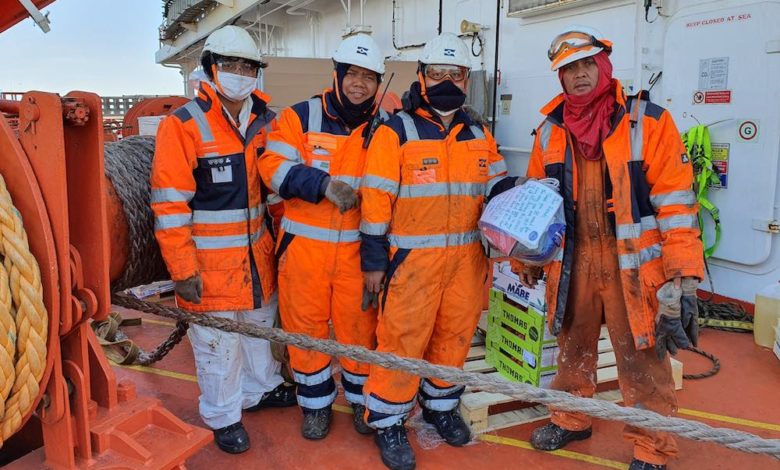
The maritime industry struggles to attract the next generation of talent not just because of working conditions, but because it consistently tells the wrong story about itself. The latest installment from our brand new shipmanagement magazine that is being distributed across Posidonia this week.
Peter Schellenberger, who heads up consultancy Novomaxis, opens this segment with a provocation the industry needs to hear. “Our industry is not as bad or boring as we often want to assume. It is even borderline sexy when the narrative is right.” The problem, he argues, is not the product – it is the marketing. Shipping needs to adopt the social media toolbox, work with influencers and let peer-to-peer communication do the heavy lifting. The content is there: decarbonisation, digitalisation, AI adoption, the foundational importance of maritime trade to global commerce. “Do good things and talk about them,” Schellenberger says.
But he is equally clear that better messaging alone will not fix a broken proposition. “The industry needs to find global replies to seafarer criminalisation, bullying, shore leave, underrepresentation of women onboard and other important matters.” The treatment of the thousands of seafarers stranded in the Persian Gulf is, he notes, under global scrutiny. Authentic communication requires authentic behaviour to back it up. And it requires proper pay: “We have to pay what it’s worth.”
Vikas Trivedi, co-CEO of shipmanagement at Synergy Marine Group, trades borderline sexy talk with a dollop of reality. “The industry should stop selling only romance and start selling relevance,” he argues. The pitch to young professionals, he says, needs to be rebuilt around what shipping actually offers: technology, global significance, early responsibility, meaningful post-sea pathways and human sustainability. “Connectivity, welfare, mentoring, inclusion and human sustainability are now central to the employment proposition. Shipping keeps the world moving, but it must also offer dignity and a future.”
Massimo De Vincenzo, managing director of SeaQuest Shipmanagement, is more blunt about the self-inflicted nature of shipping’s image problem. “We market ourselves through a lens of hardship and regulation, then wonder why the next generation looks elsewhere.” The reality of what ship management actually involves, he argues, is far more compelling than the industry typically presents. “Shipping sits at the intersection of global logistics, environmental science, data analytics and geopolitics – there is no more complex or consequential operational environment.” For a young professional drawn to AI or sustainability, he says, shipmanagement offers genuine intellectual depth and global impact. “We need to stop apologising for what we are and tell that story with conviction – and take it to the places where the next generation actually is.”
Niraj Nanda, chief commercial officer of Anglo-Eastern, argues that the messaging problem is ultimately a credibility problem. “The industry needs to speak more honestly about what a maritime career looks like today and what it can become.” Young professionals are sophisticated enough to see through inflated promises. “The younger generations are more likely to be drawn to careers that offer purpose, learning and credibility – not slogans. Attracting talent requires consistency between message and experience.”
Kuba Szymanski, secretary-general of InterManager, distils the challenge to its essence. “We need to move beyond slogans. The next generation will not be convinced by words alone – they will judge us by our actions.” His standard is uncompromising. “As an industry, we are only as good as our last action.”
It is a standard that cuts through the noise of marketing campaigns and conference declarations. Young professionals researching a career in shipping will not be swayed by a well-produced recruitment video if the Seafarer Happiness Index tells a different story, if social media carries accounts of criminalisation and poor welfare, or if the industry’s response to a crisis like the Gulf situation is slow and inadequate.
The common thread running through every contribution is the same: the gap between what shipping claims to be and what it demonstrably is needs to close – and it needs to close on both sides simultaneously. Better storytelling matters. But the story has to be true.
To access the full Splash Shipmanagement Market Report 2026, click here (https://issuu.com/sinoship/docs/shipmanagement_report_2026?fr=xKAE9_zMzMw)

Subscribe to The Seafarer Times RSS Feeds

User login
Who's online
There are currently 0 users online.